All About Tankless Toilets
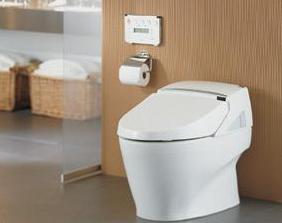
It's likely that you've heard terms like "low-flow toilets" and "dual-flush toilets" being bandied about. But have you heard about tankless toilets?
Tankless Toilets vs Traditional Toilets
Tankless toilets are exactly what their name implies: toilets without tanks. In order to understand how they work, first you need a basic understanding of traditional toilets.
Normally, a toilet has two main parts: the tank and the bowl. The tank is raised above the bowl, and gravity aids in the flushing process. When the user flushes the toilet, a valve at the bottom of the tank opens, allowing the water that was sitting in the tank to flow down into the bowl and push the dirty water out through a siphon at the bottom of the bowl.
How Tankless Toilets Work
There are an increasing number of variations on the traditional toilet, but most function on the same basic mechanisms.
However, the tankless toilet alters the layout. Instead of storing water in a tank and using gravity to power the flush, tankless toilets hook up directly to your house's pipes, using an electric pump located in the bowl to power the flush. A valve is set to allow only a predetermined amount of water into the bowl when you flush, meaning the toilet should not be able to overflow. The draining works in the same way as in a traditional toilet.
Tankless Toilet Pipe Size
There is still some debate as to the necessary width of the pipe supplying the fresh water to tankless toilets. There is a school of thought that believes ½" pipes are sufficient to provide enough water quickly enough, but another camp firmly asserts that the pipe must be 1" wide to ensure sufficient volume at an appropriate speed. If the water does not flow into the toilet quickly enough (because the pipe is too small), the toilet will have prolonged or repeated flushing.
Advantages of Tankless Toilets
- Smaller than traditional toilets, tankless toilets save space, a definite advantage in a cramped bathroom.
- These new toilets have a streamlined, contemporary design profile.
- Their pipes can enter either from a wall behind the toilet or from the floor, allowing more ways to customize your bathroom design.
- Because tankless toilets use an electric pump, the bowl refills much more quickly, especially helpful there is a lineup for the bathroom.
- Tankless toilets are more environmentally friendly than traditional toilets in one way. A tank can spring a leak, causing the attached toilet to run continuously. However because it has no tank and such quick refill rates, there is no chance for a tankless toilet to run and waste water.
Disadvantages of Tankless Toilets
- The biggest downside to tankless toilets is the electricity factor: If your power goes out, your toilet is not going to flush.
- In addition, it may be frustrating to a seasoned do-it-yourselfer that most tankless toilet repairs and installations are complex, requiring you to hire a licensed plumber.
Is a Tankless Toilet for You?
Tankless toilets require a relatively wide supply pipeline in the house. When constructing a new home, you will be able to install pipes to suit your needs. If you want to replace a toilet in an existing home without the correct supply line, the high pressure from the flush could damage your pipes. In that case, a tankless toilet probably isn't worth the extra cost to redo or retrofit the pipes.
Speaking of cost, that is another serious factor to consider when deciding on a toilet type; tankless toilets are expensive, and only a few companies make them so far, including Kohler and TOTO.
But if your home is located in an area where power outages are infrequent and you’d like to update your bathroom with a modern sleek look, tankless toilets may be for you.
Photo credit: TOTO
This article was updated November 7, 2017.


Looking for a Pro? Call us (866) 441-6648

Plumbing Average Costs
Plumbers Experiences

Clearing A Bathtub Drain Makes It Run Smoother Than Ever
Hot Water Heater Replacement By A Family Of Experts